(last update 27.08.2024, 22:38)
A few years ago, the then deputy director of the Augsburg University Library, Günter Hägele, approached Franz Körndle, the professor of musicology at the University of Augsburg. During restoration work on a printed book from the 17th century, fragments of a music manuscript were discovered. The restored book contains a copy of the Compendium Geographiae Systematicum, printed in Coburg in 1628. It can be found in the Augsburg library catalogue under the shelfmark 02/VIII.3.8.25. Hägele had already collected information about the book’s provenance: The edition contains an undated ownership note (‘M. Radt or M. Rath). It only became part of the famous Oettingen-Wallerstein collection in the 19th century, which saw an enormous increase in antiquarian books, particularly in the decades after 1800 due to secularisation and the collecting enthusiasm of Prince Ludwig von Oettingen-Wallerstein.
The news of unknown musical fragments from the early modern period aroused curiosity, and Franz Körndle immediately examined the manuscripts. Very quickly, their significance became obvious, as they contain parts of compositions attributed to Alexander Agricola, Paul Hofhaimer, Heinrich Isaac, and a certain Petrus de Riga. The notation and the manuscript point to the period around 1500 and the watermark can be traced back to Augsburg around 1517.
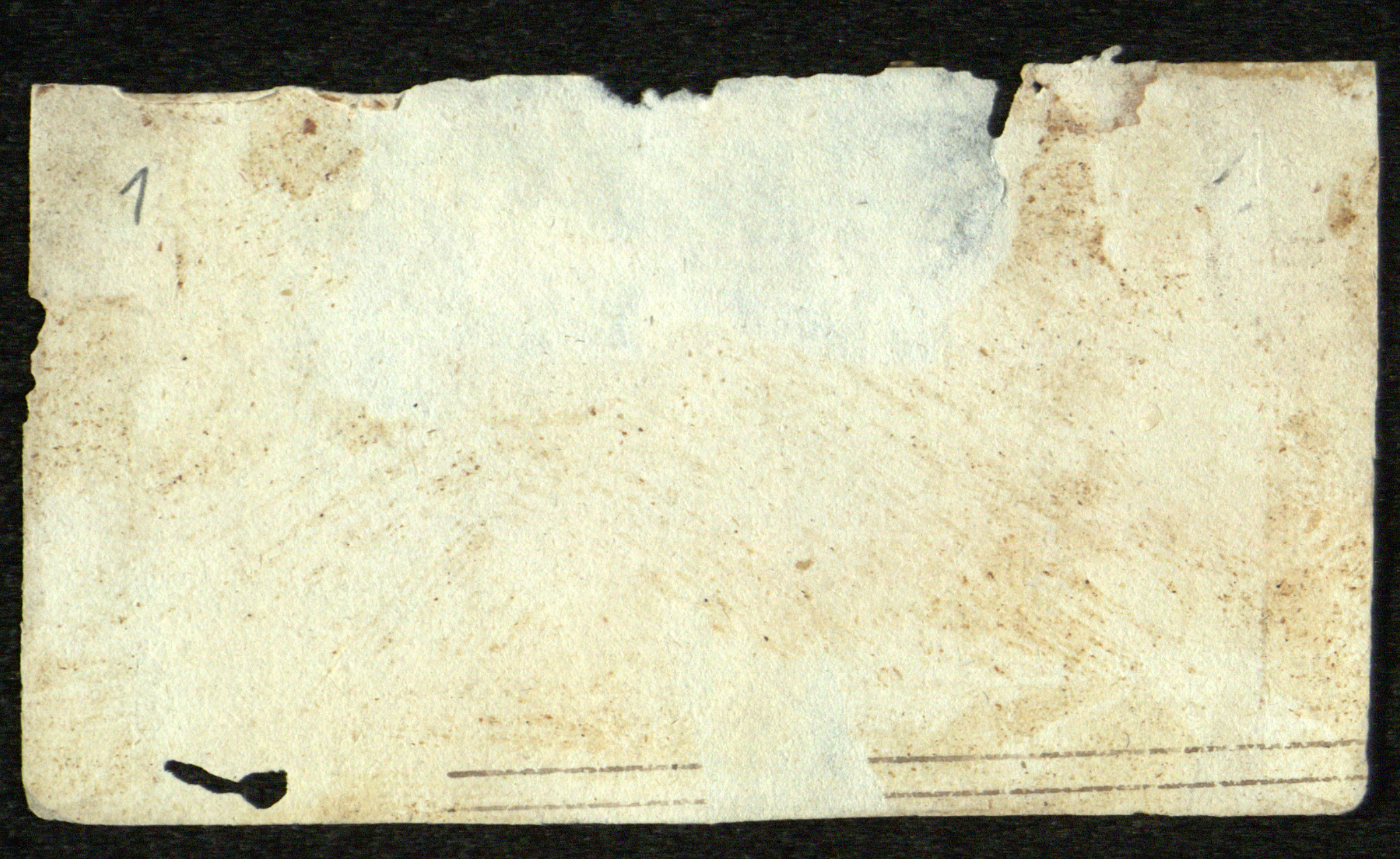
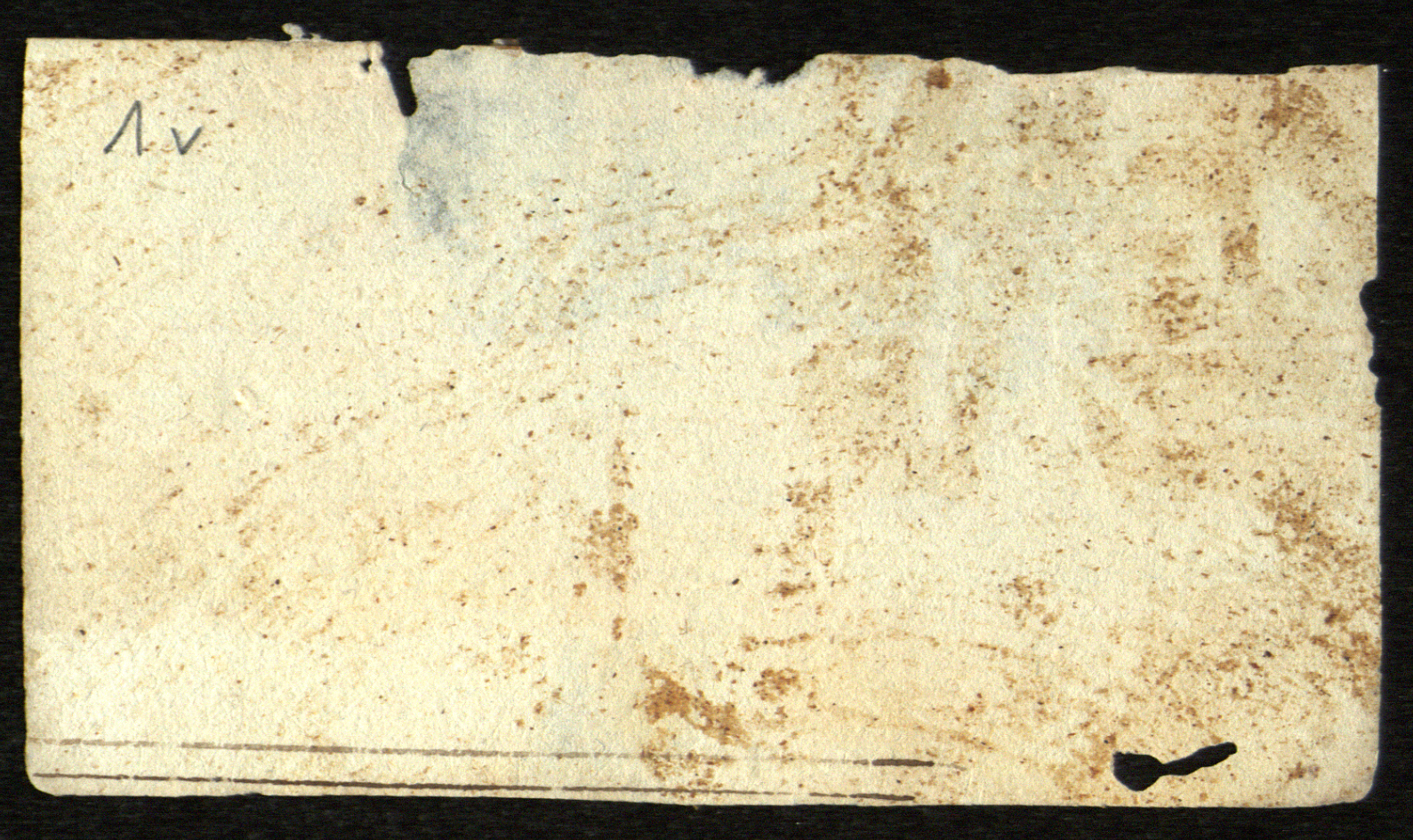
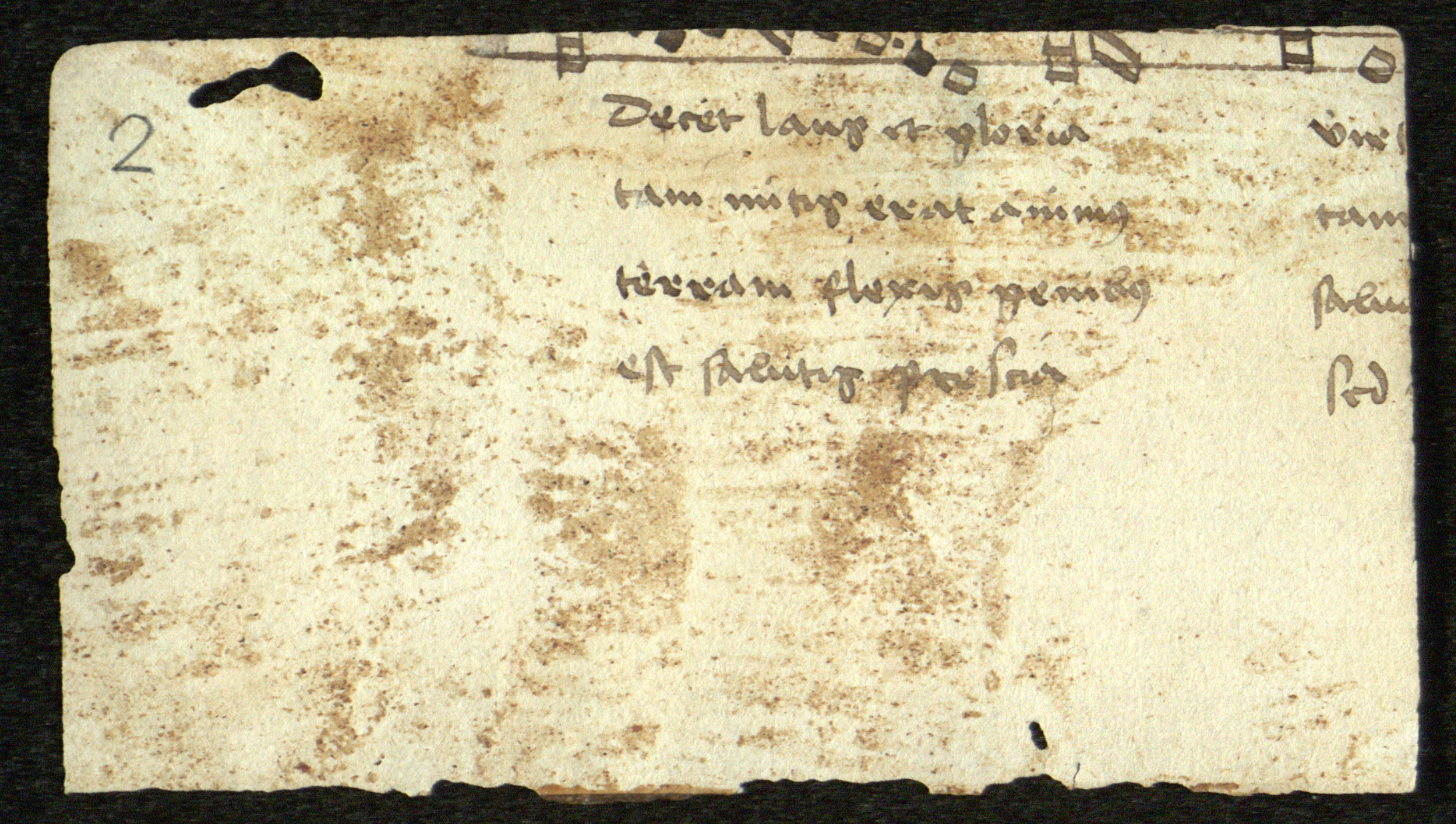
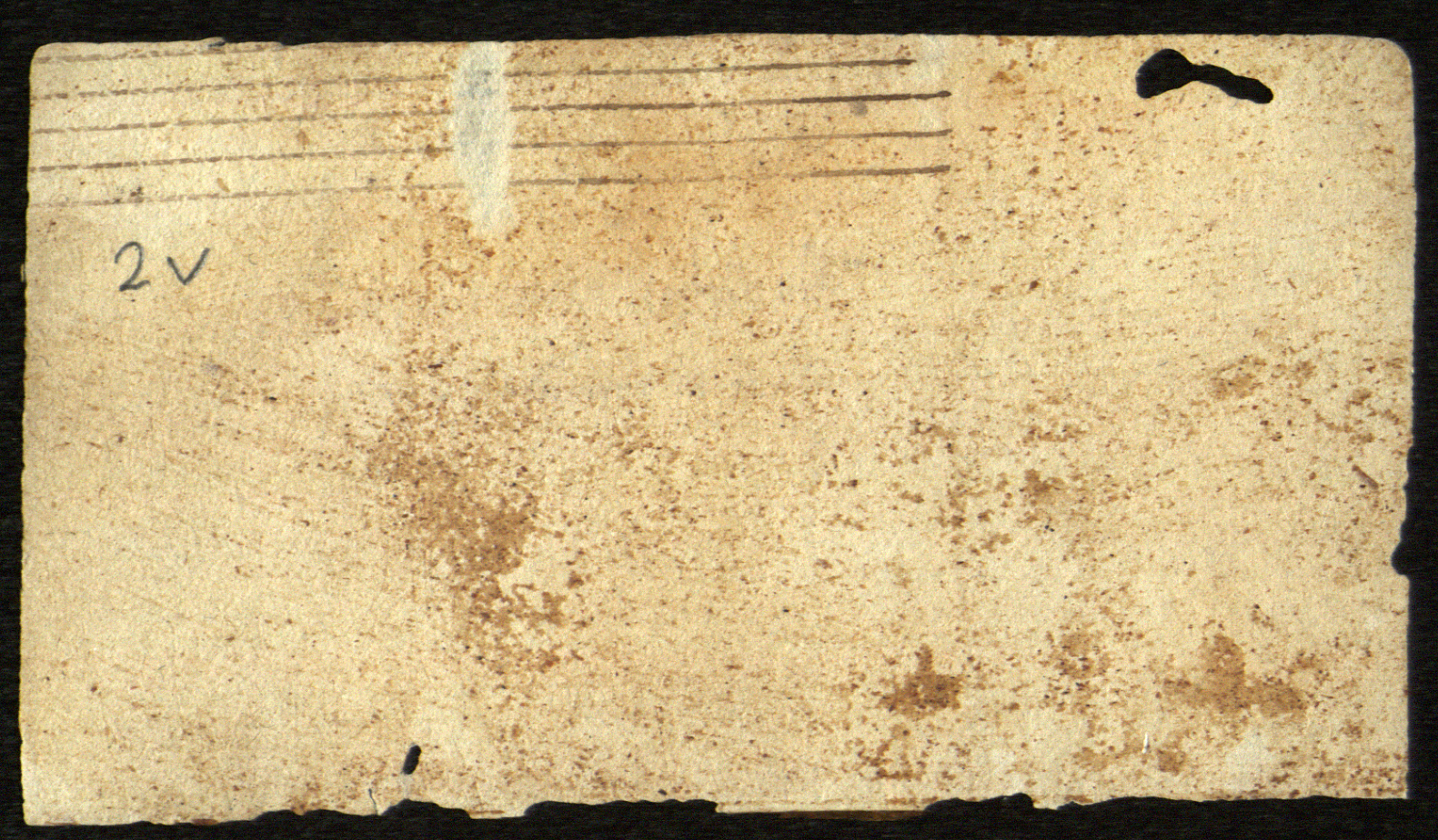

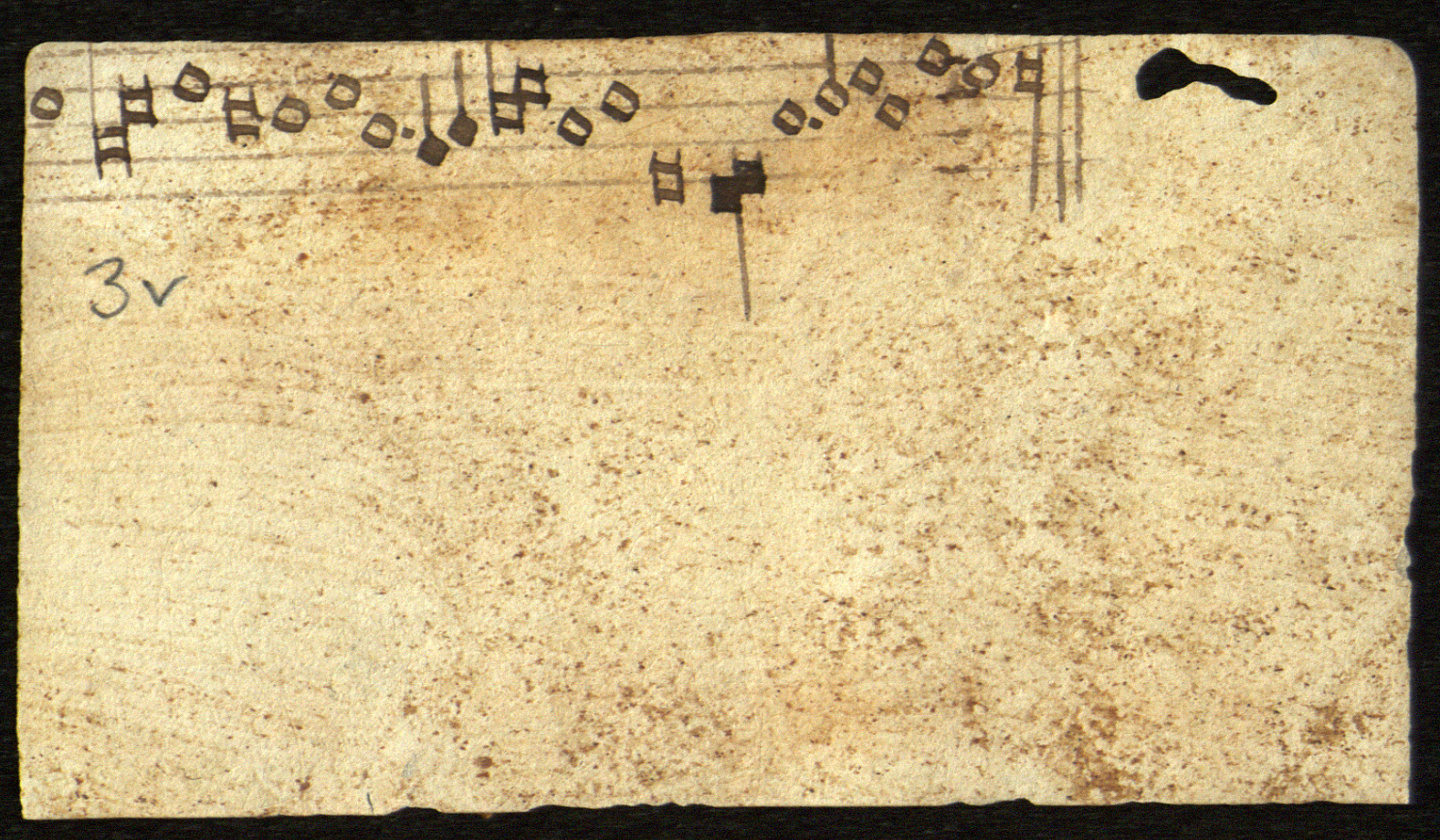

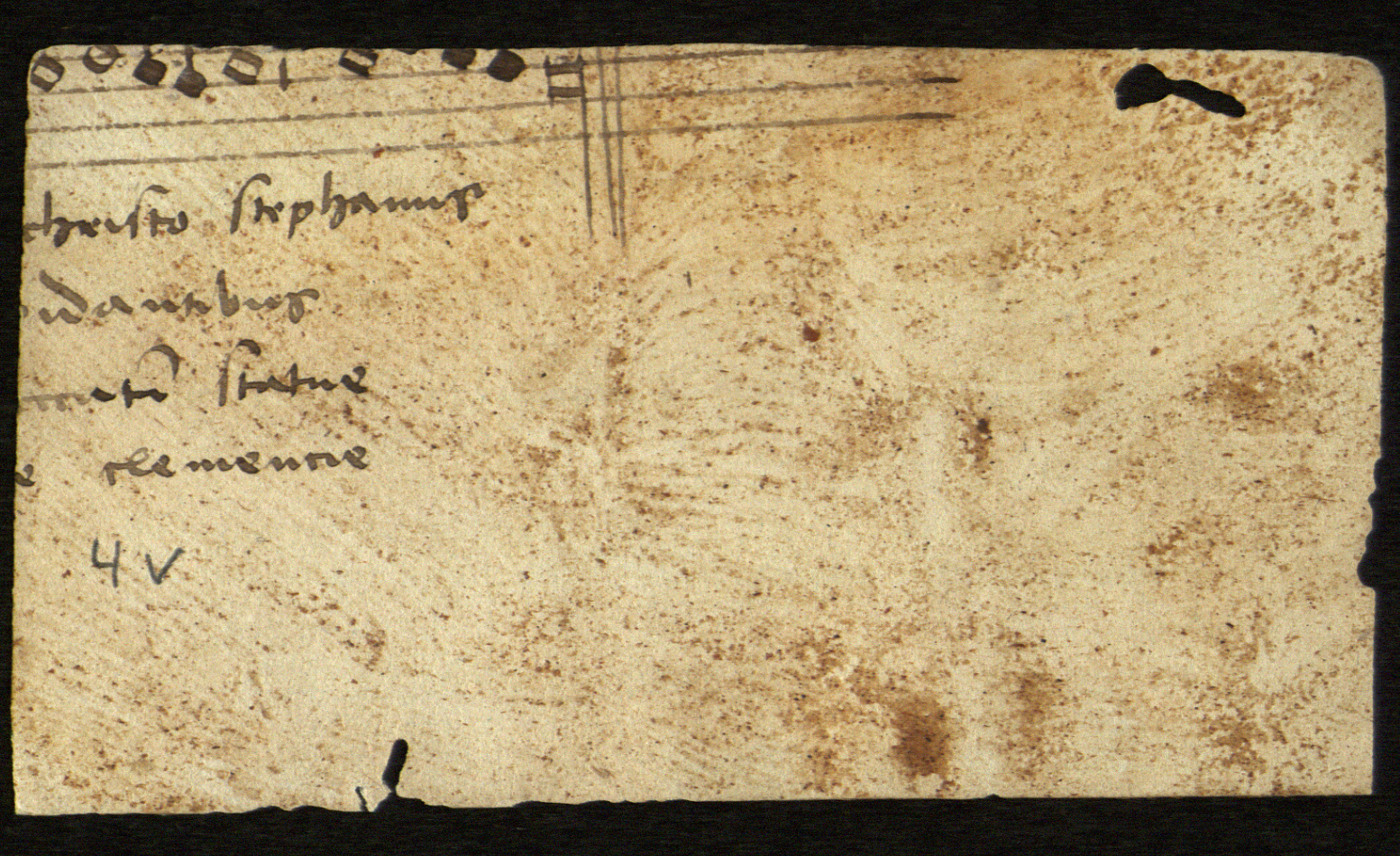
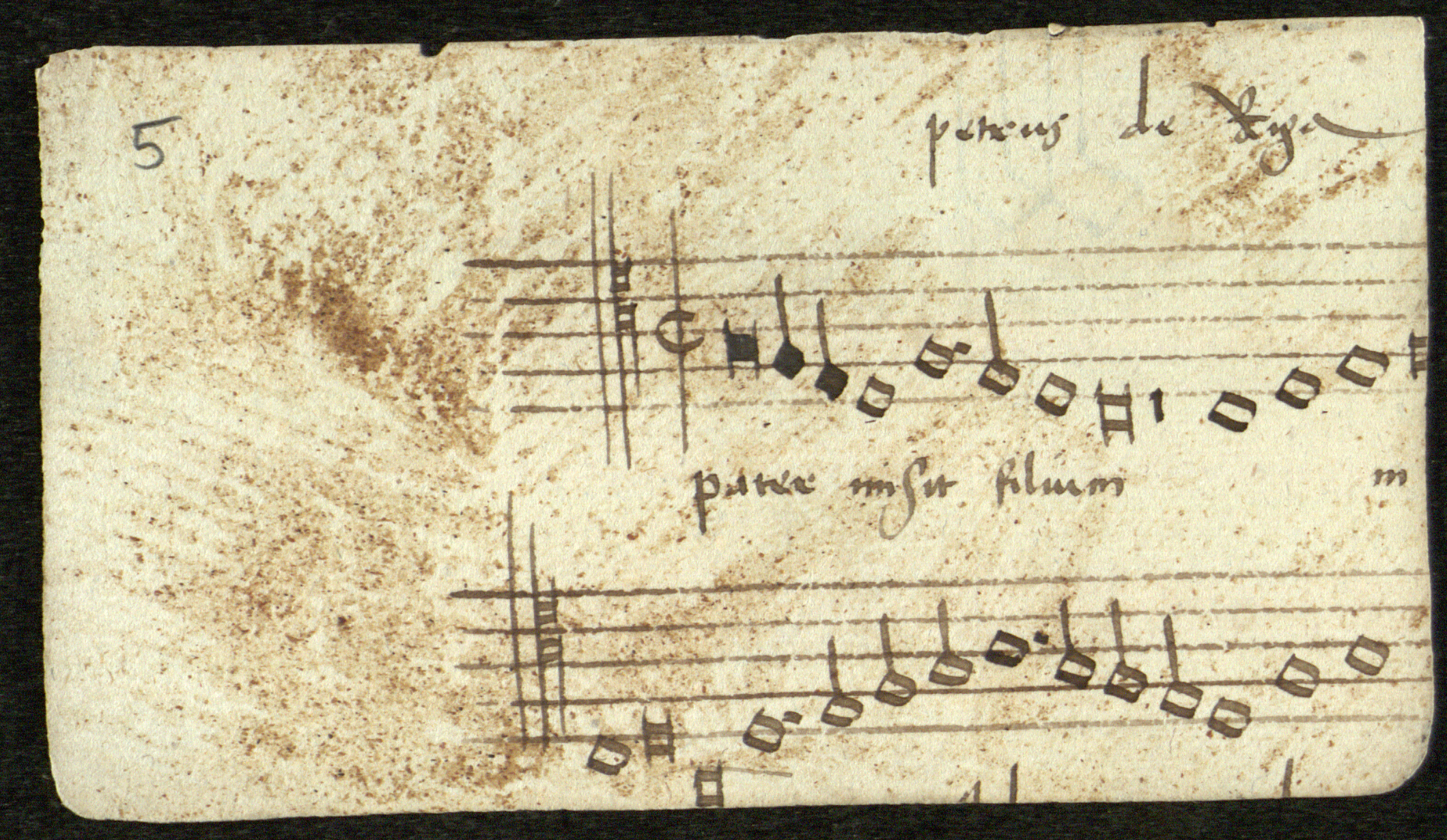
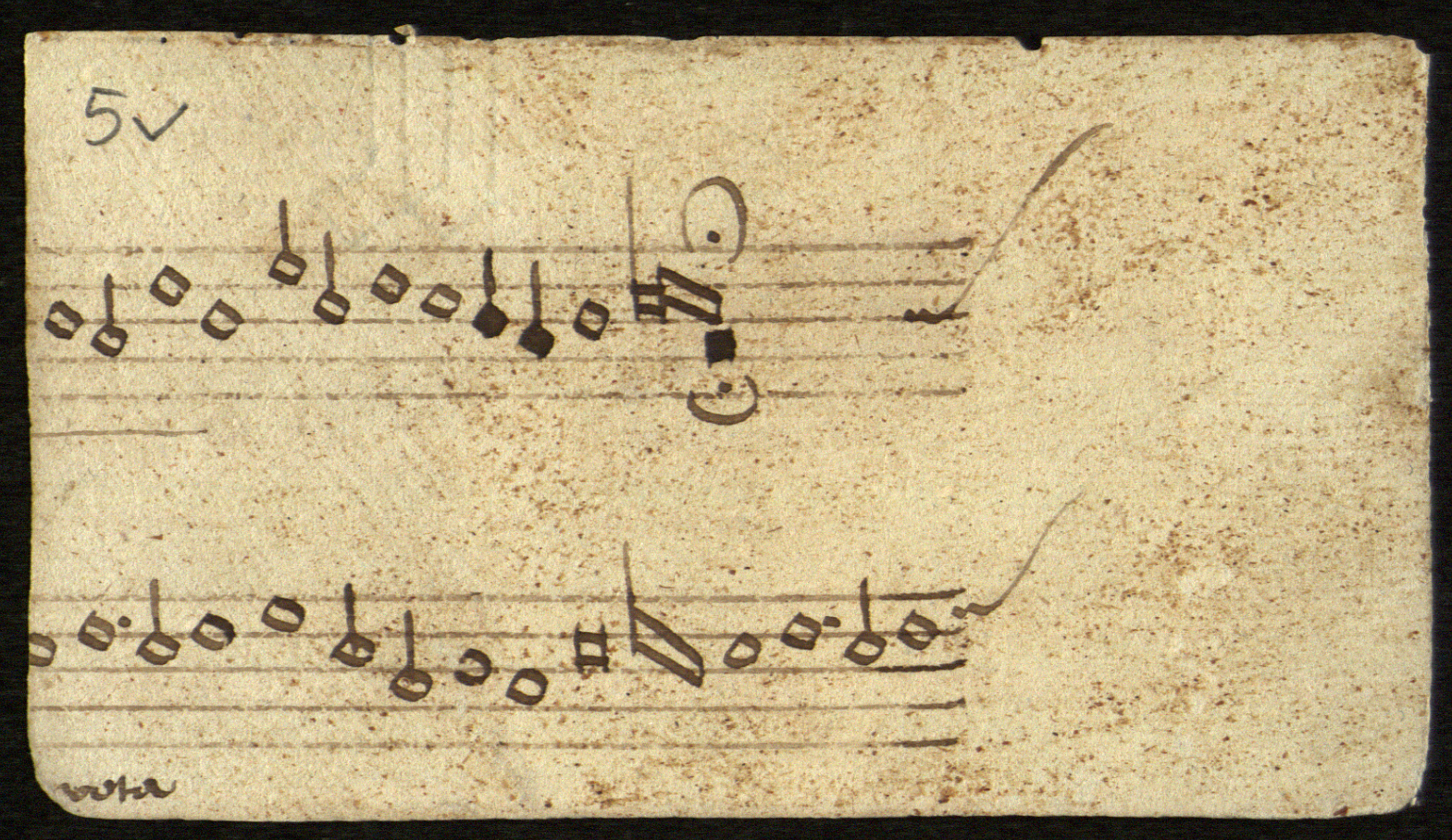
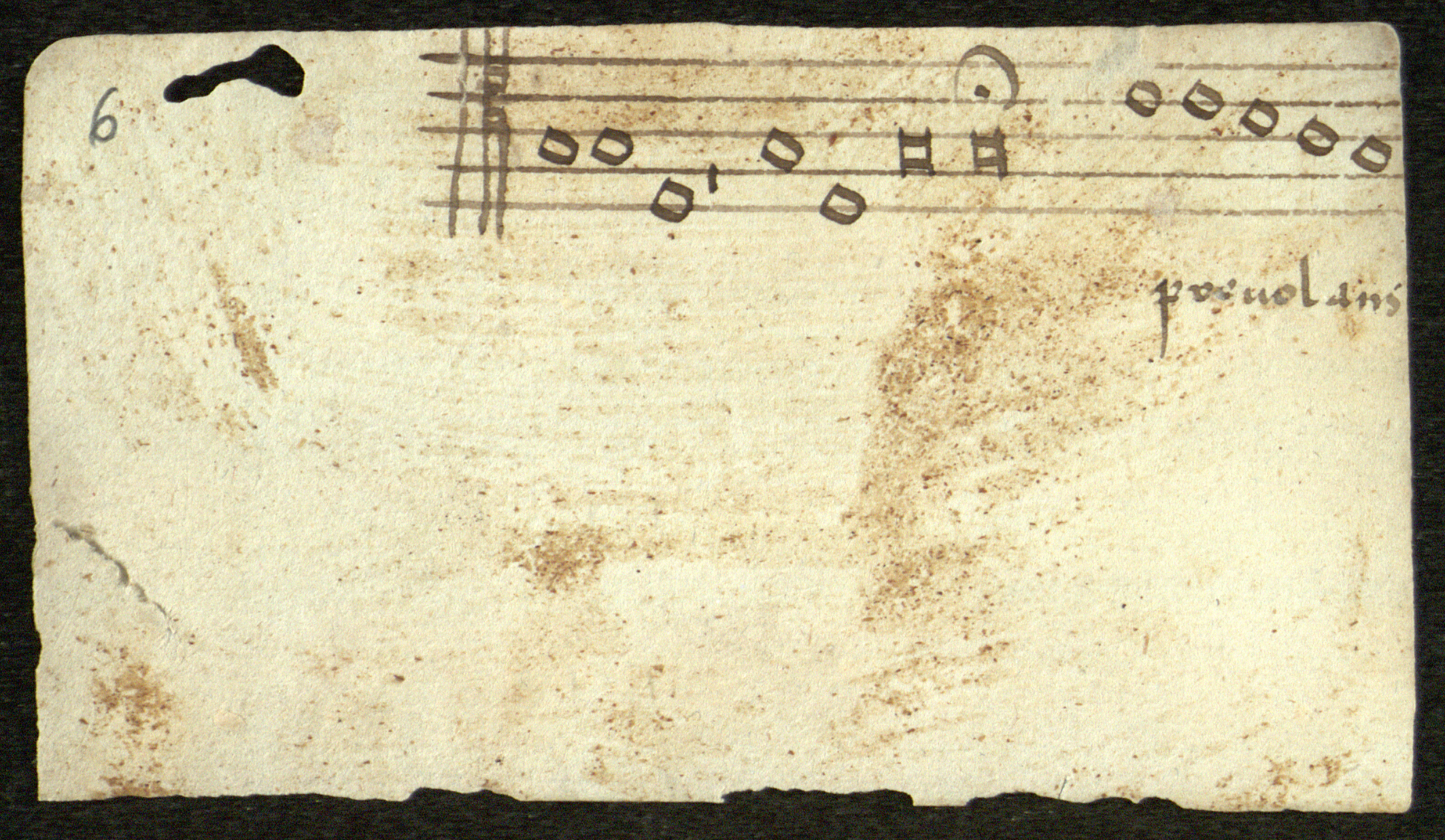
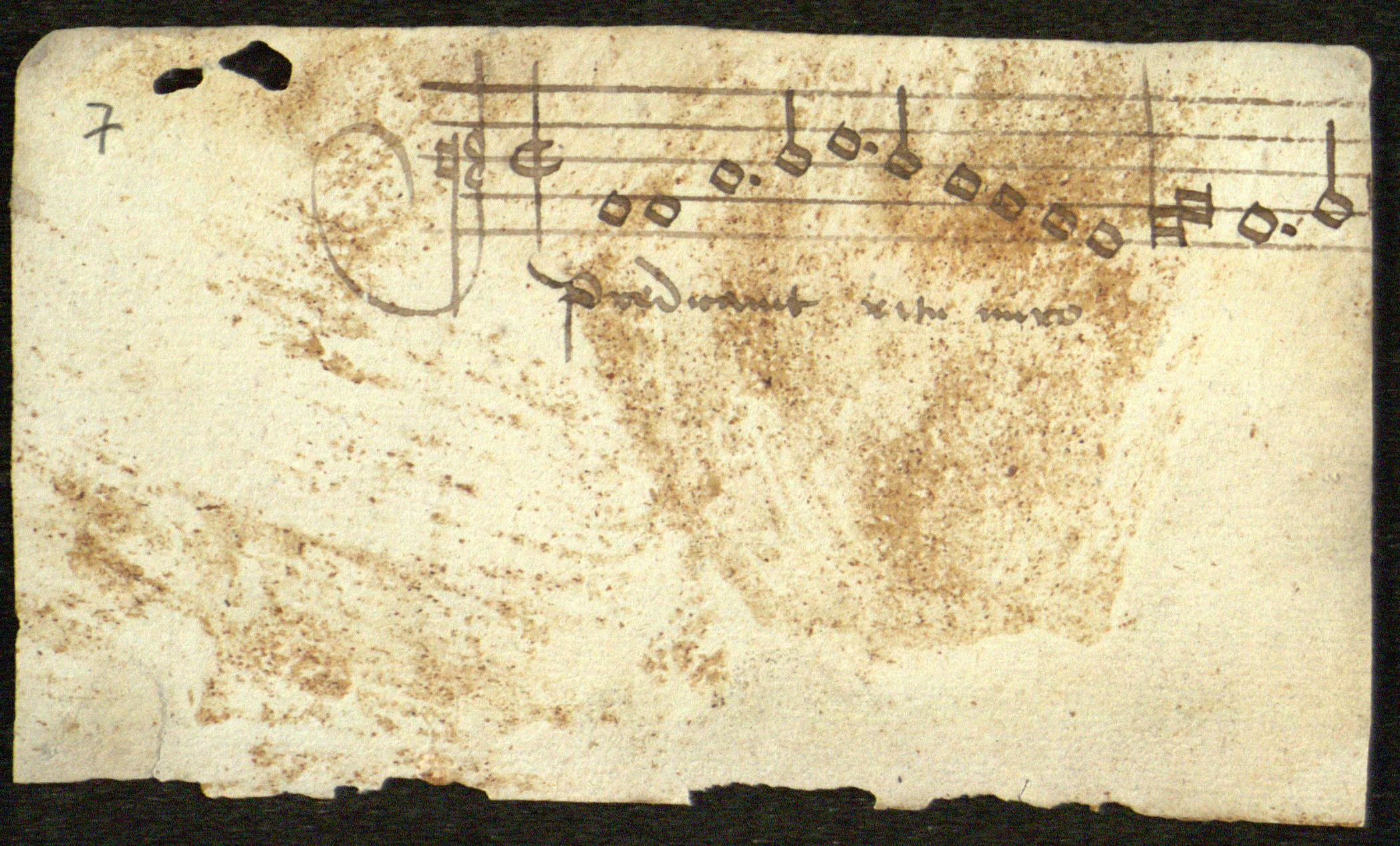
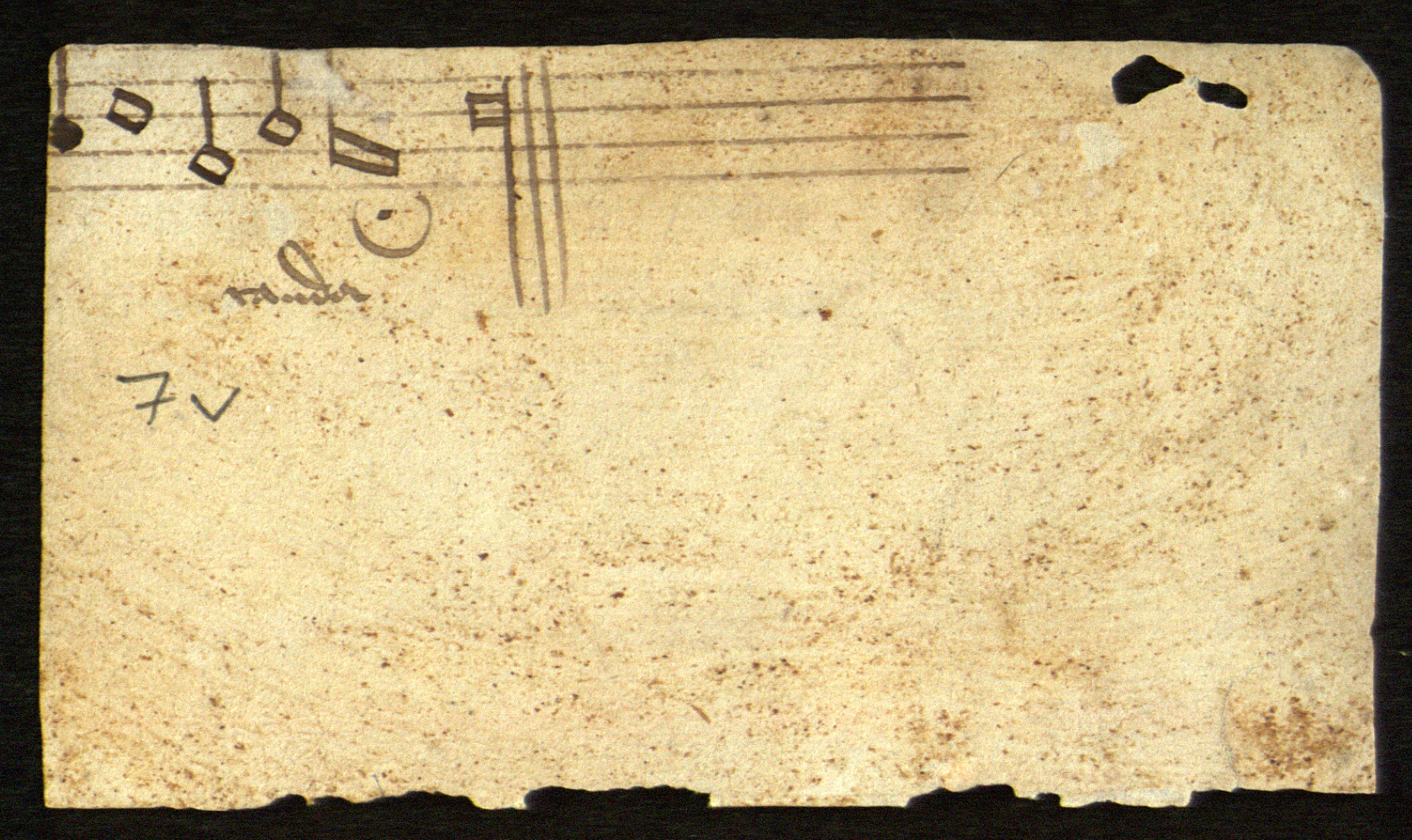
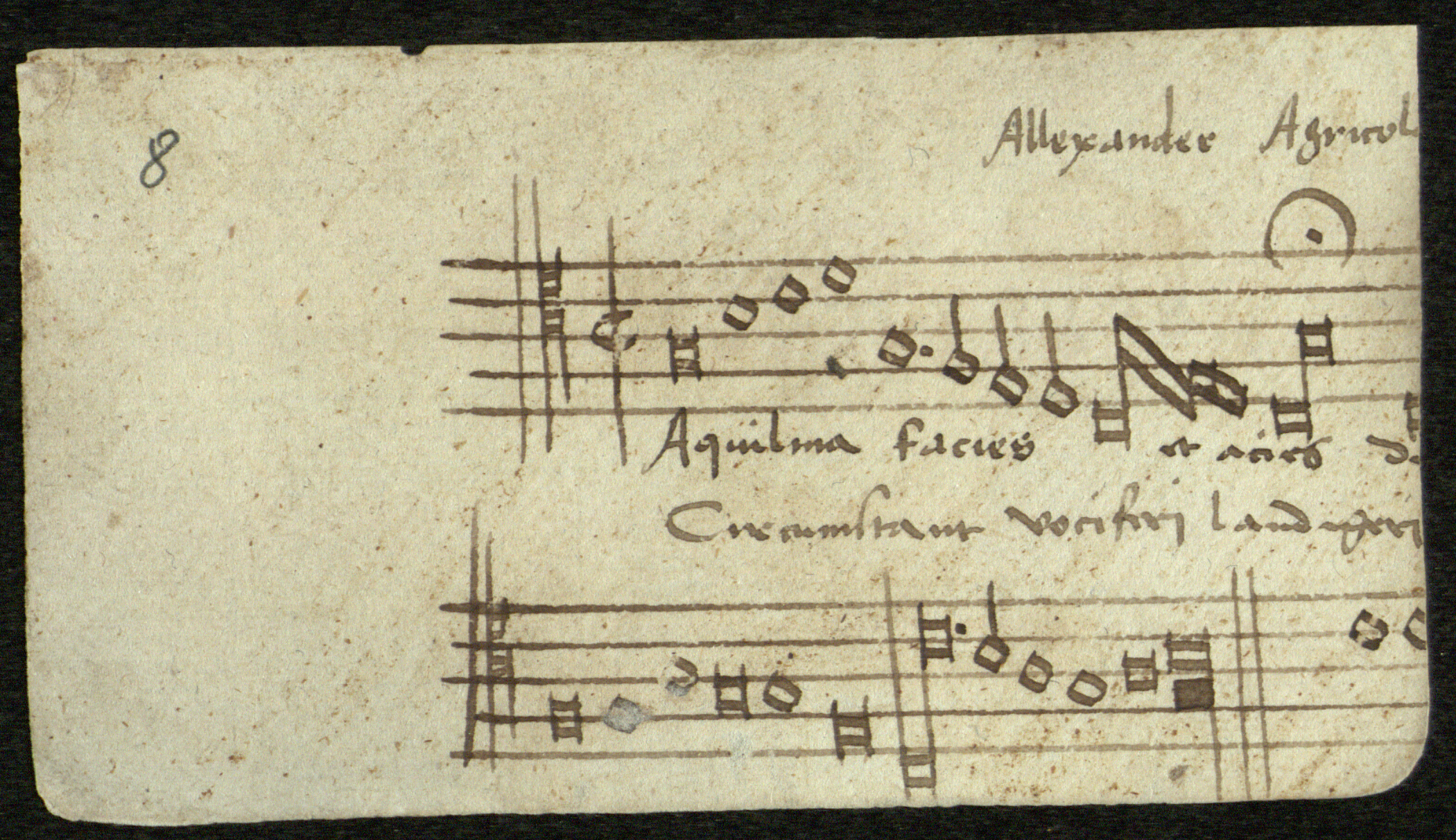

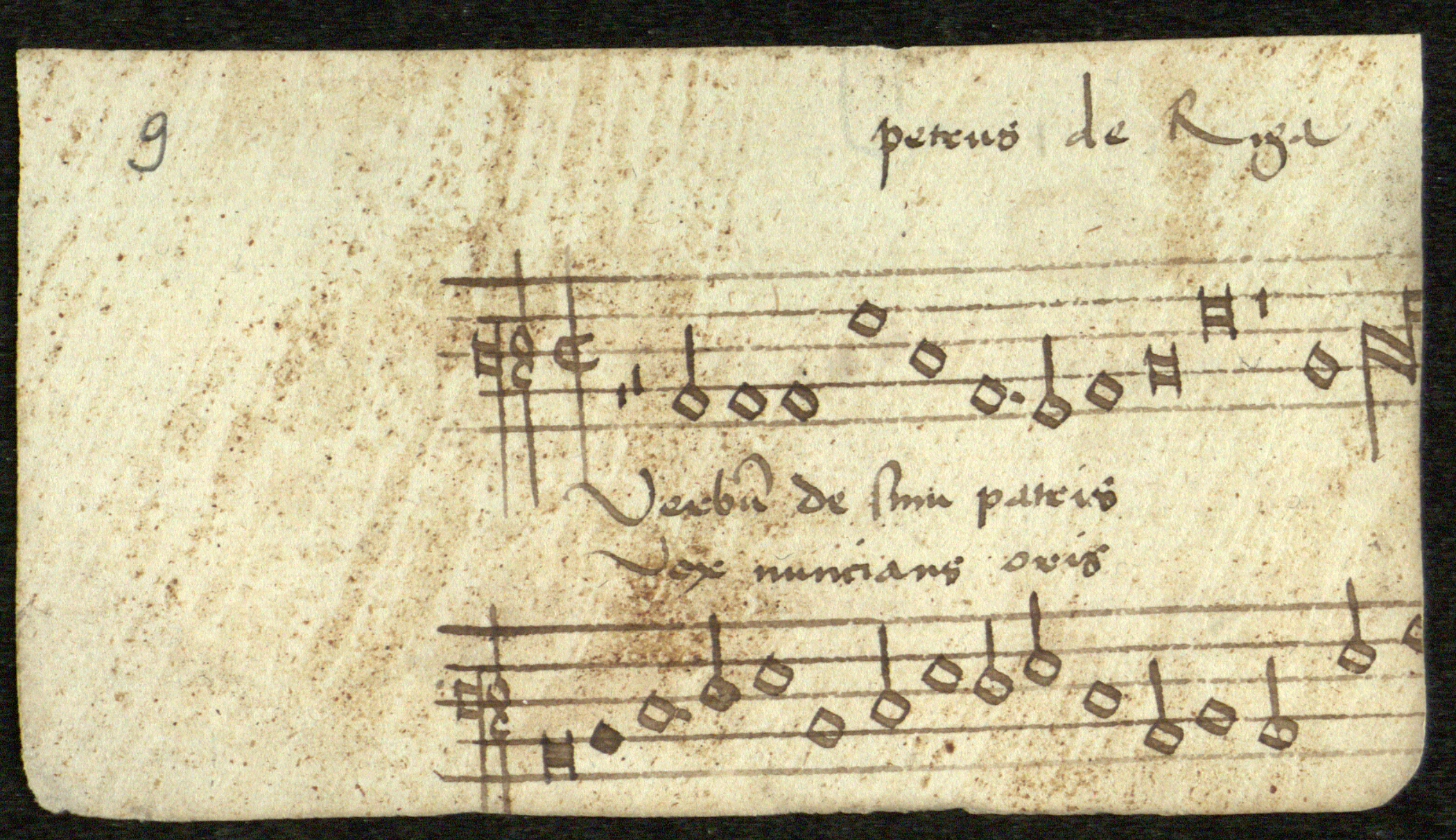
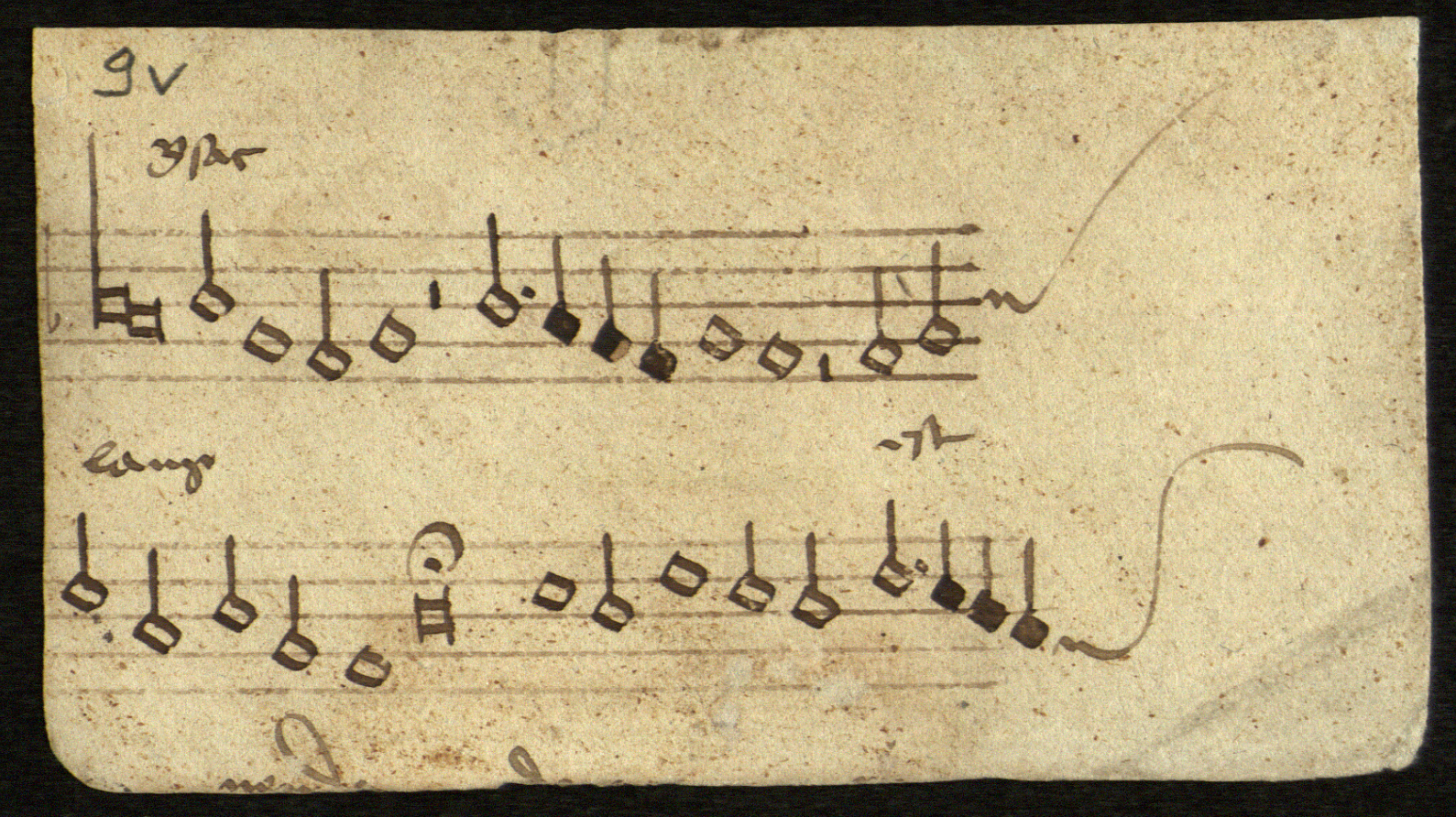
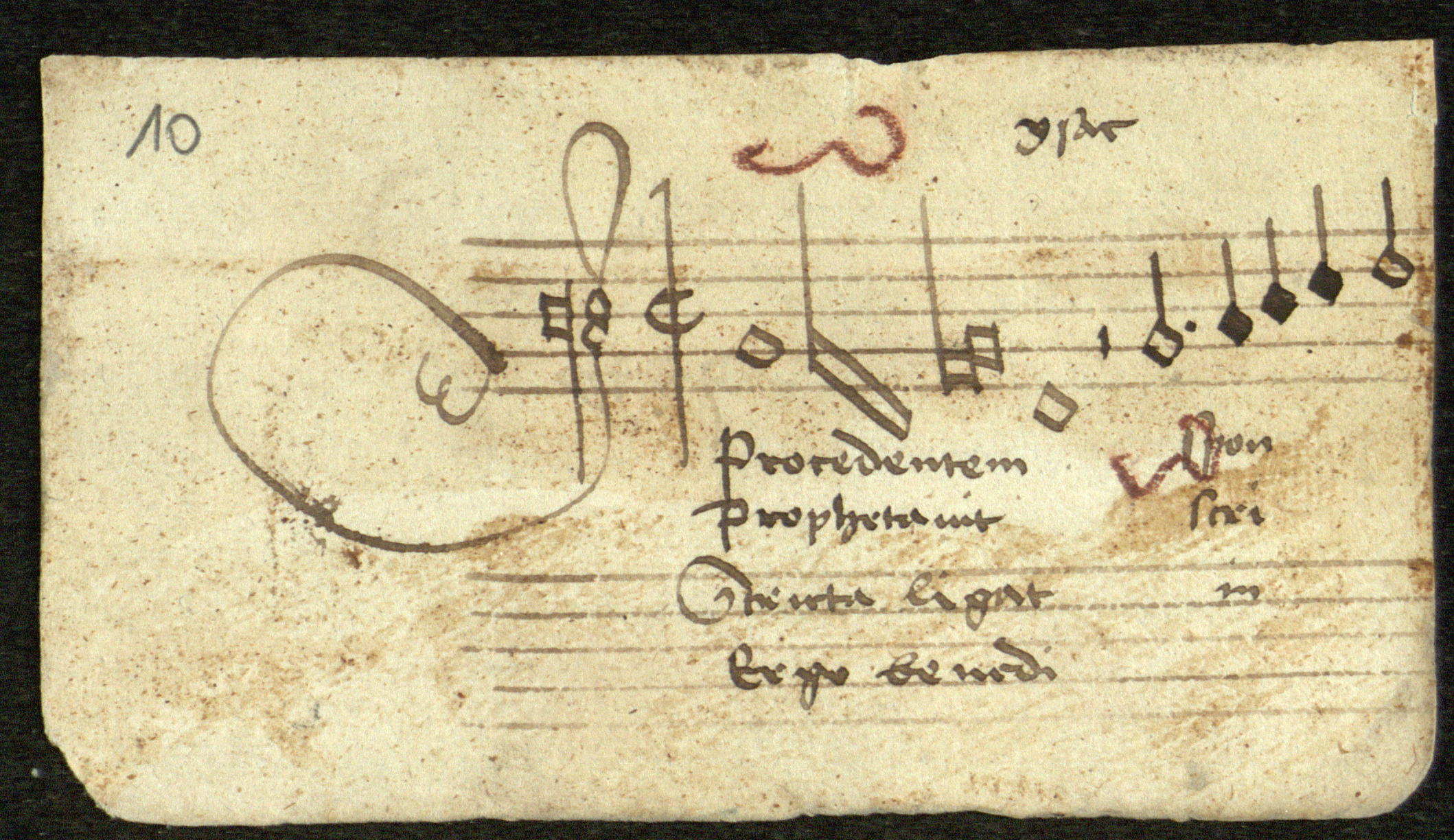
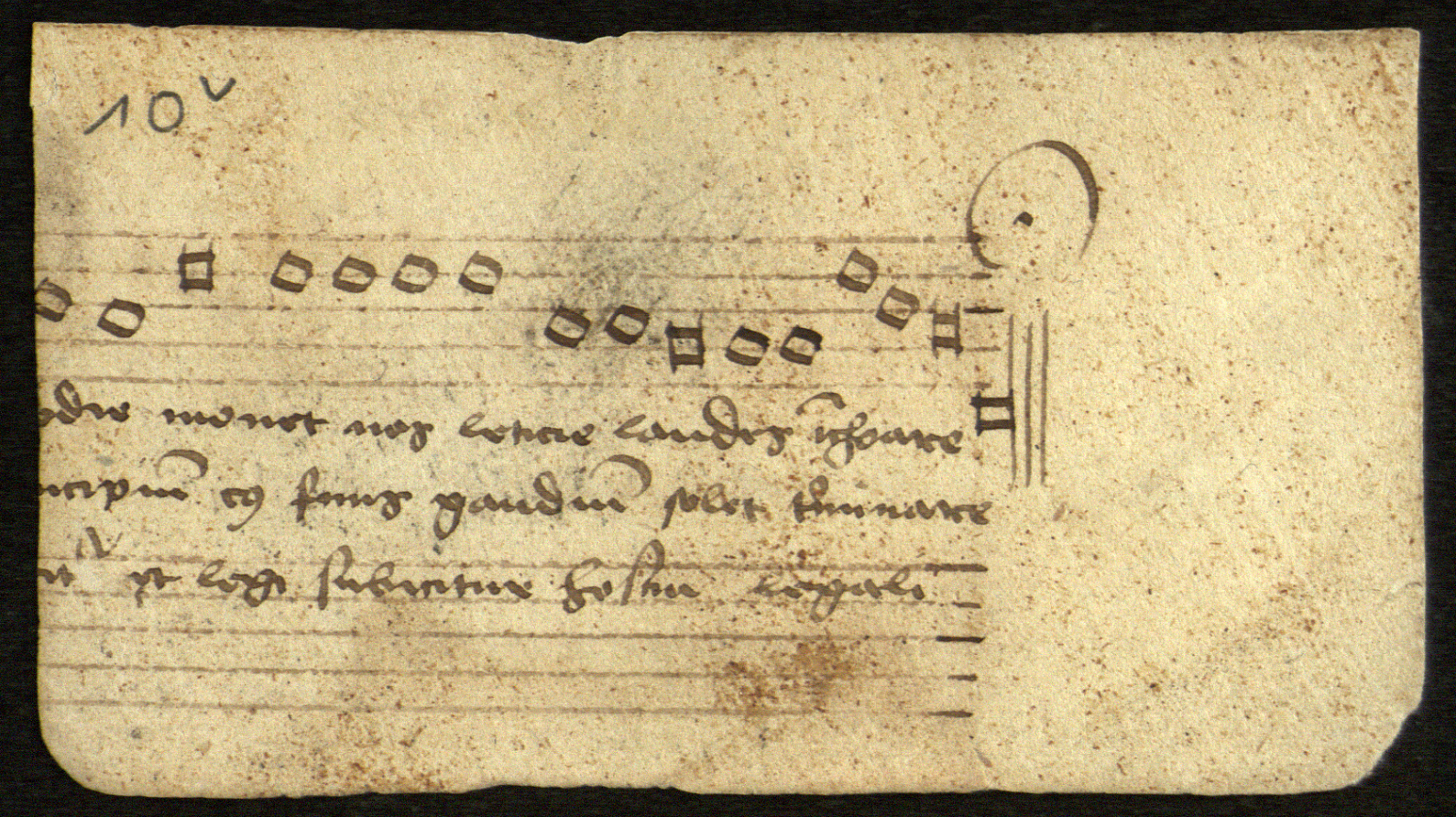
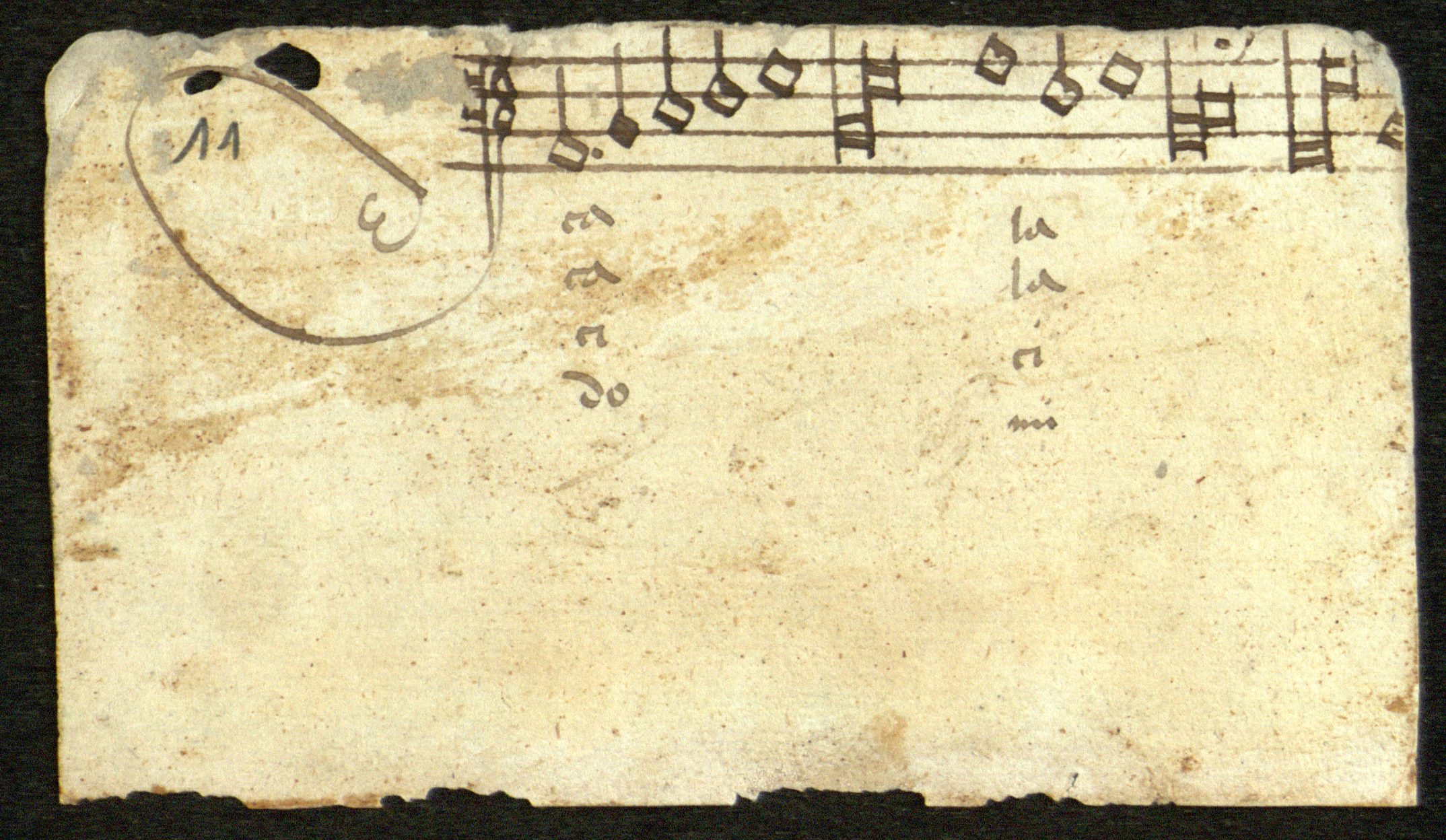
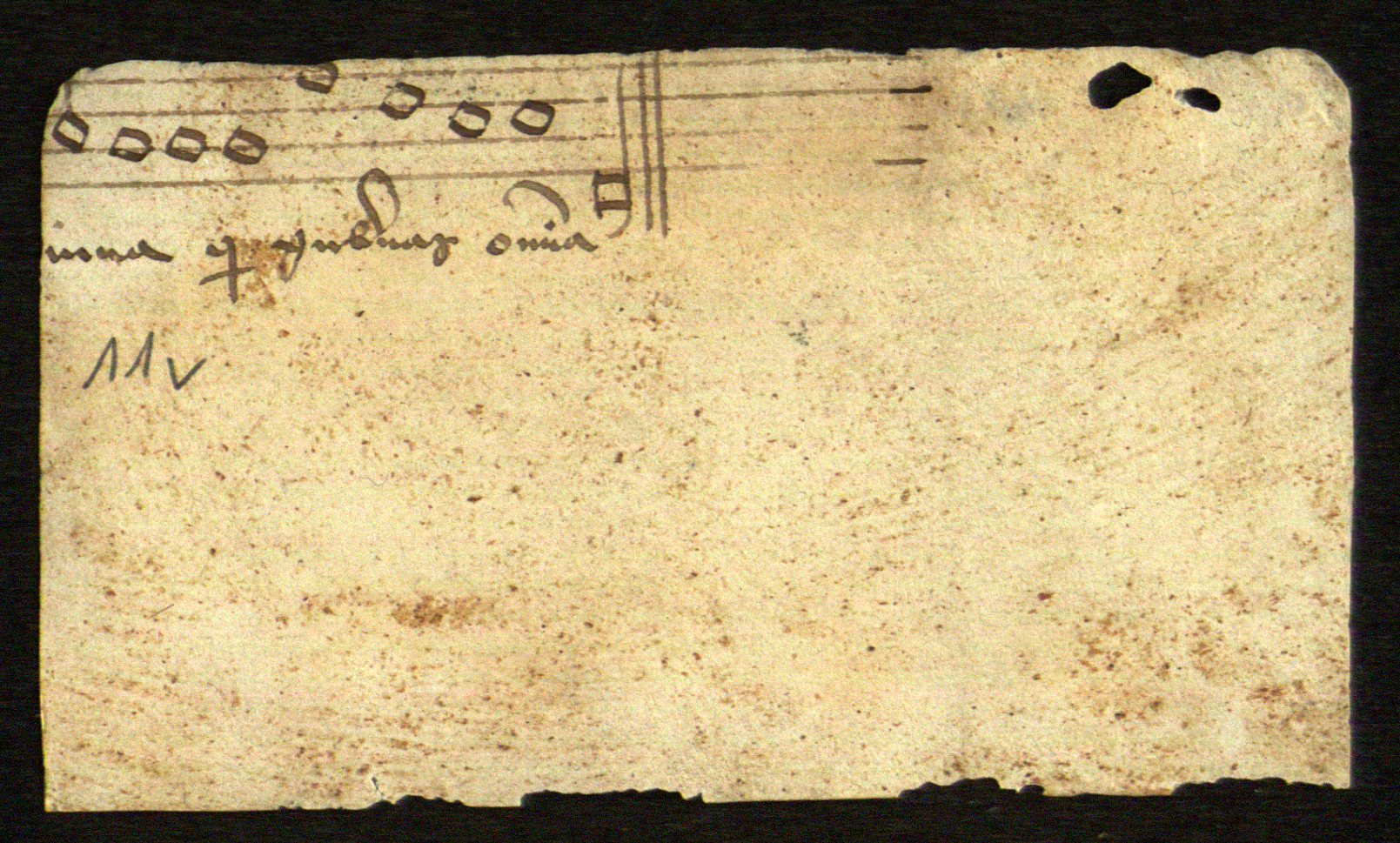
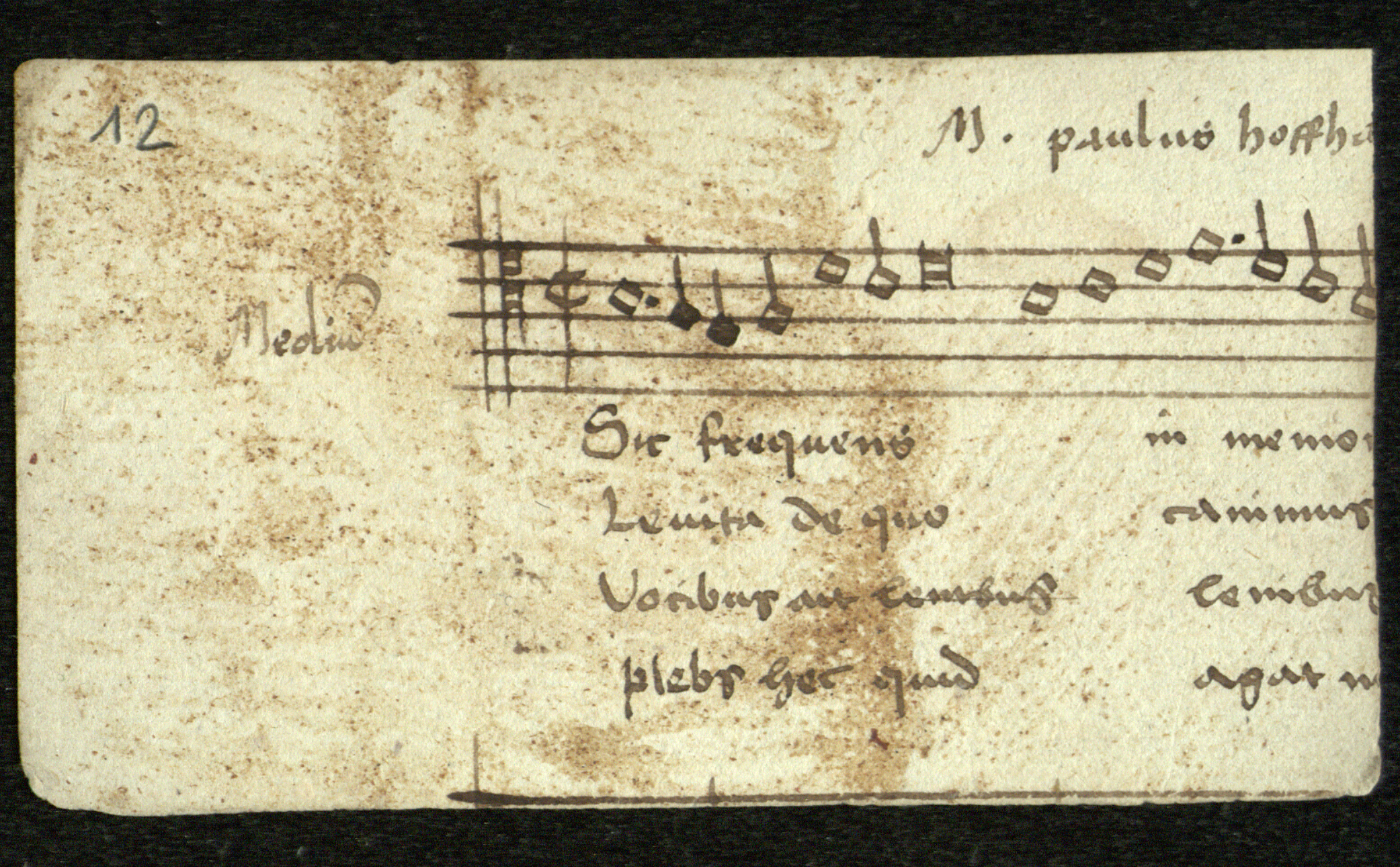
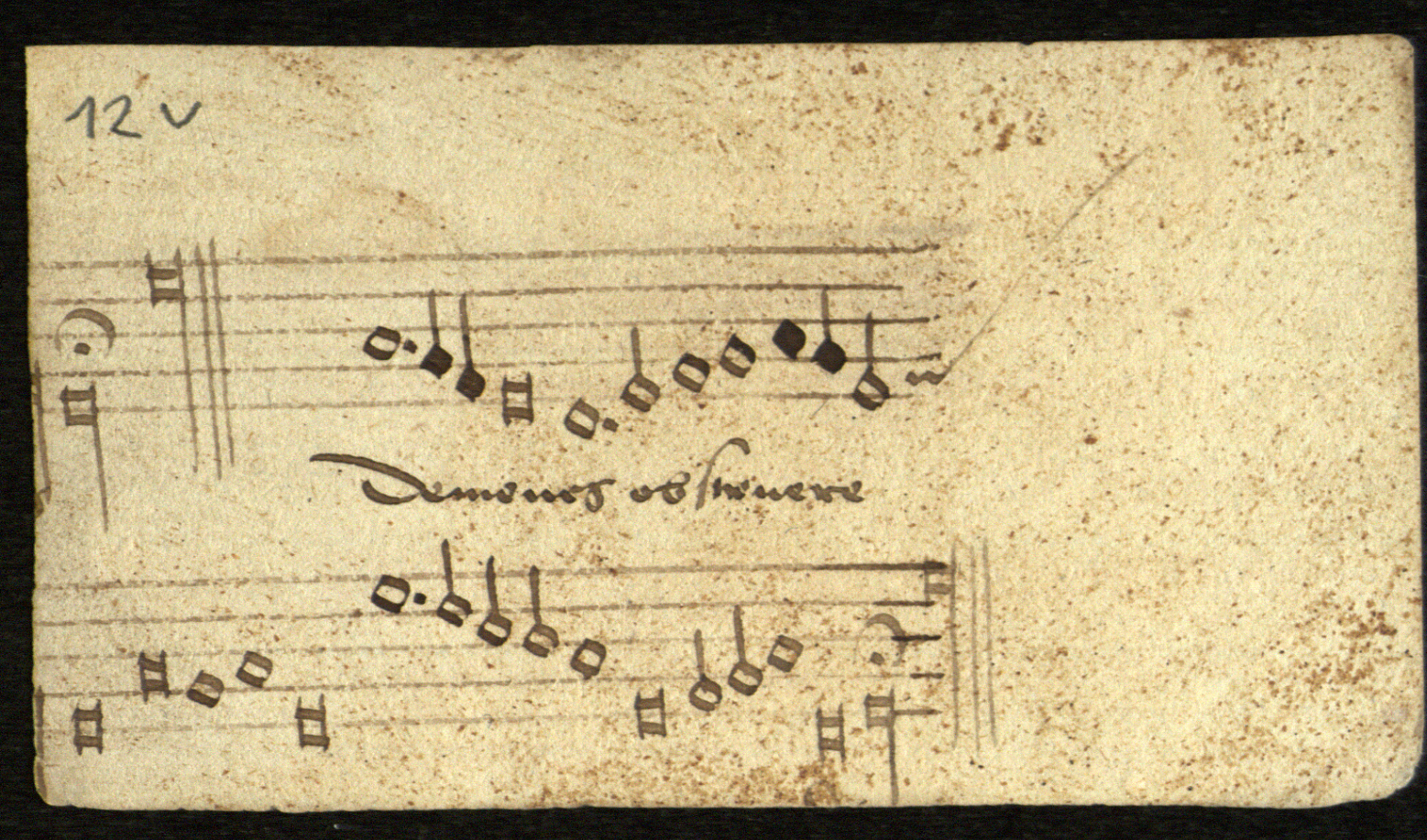
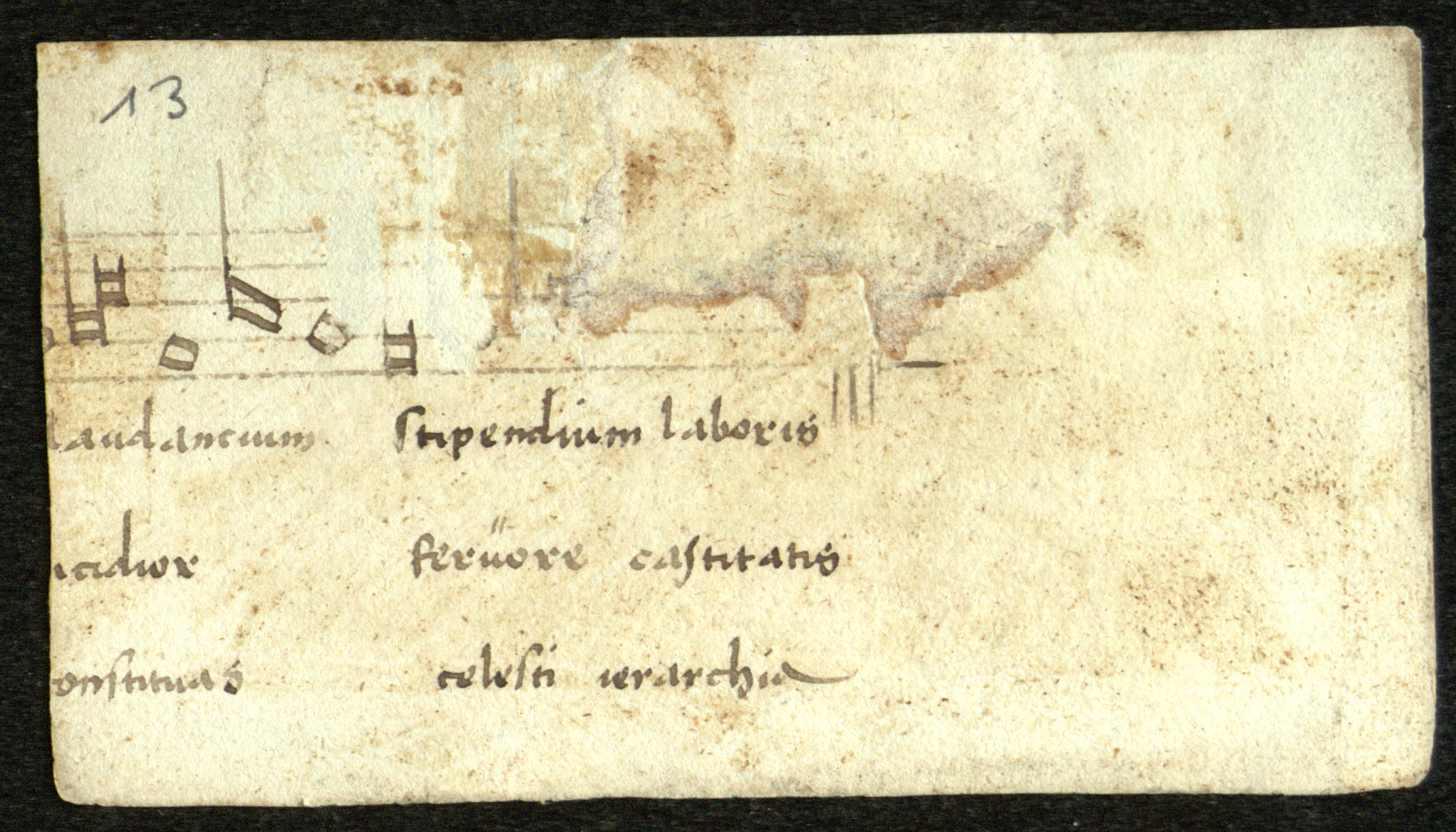
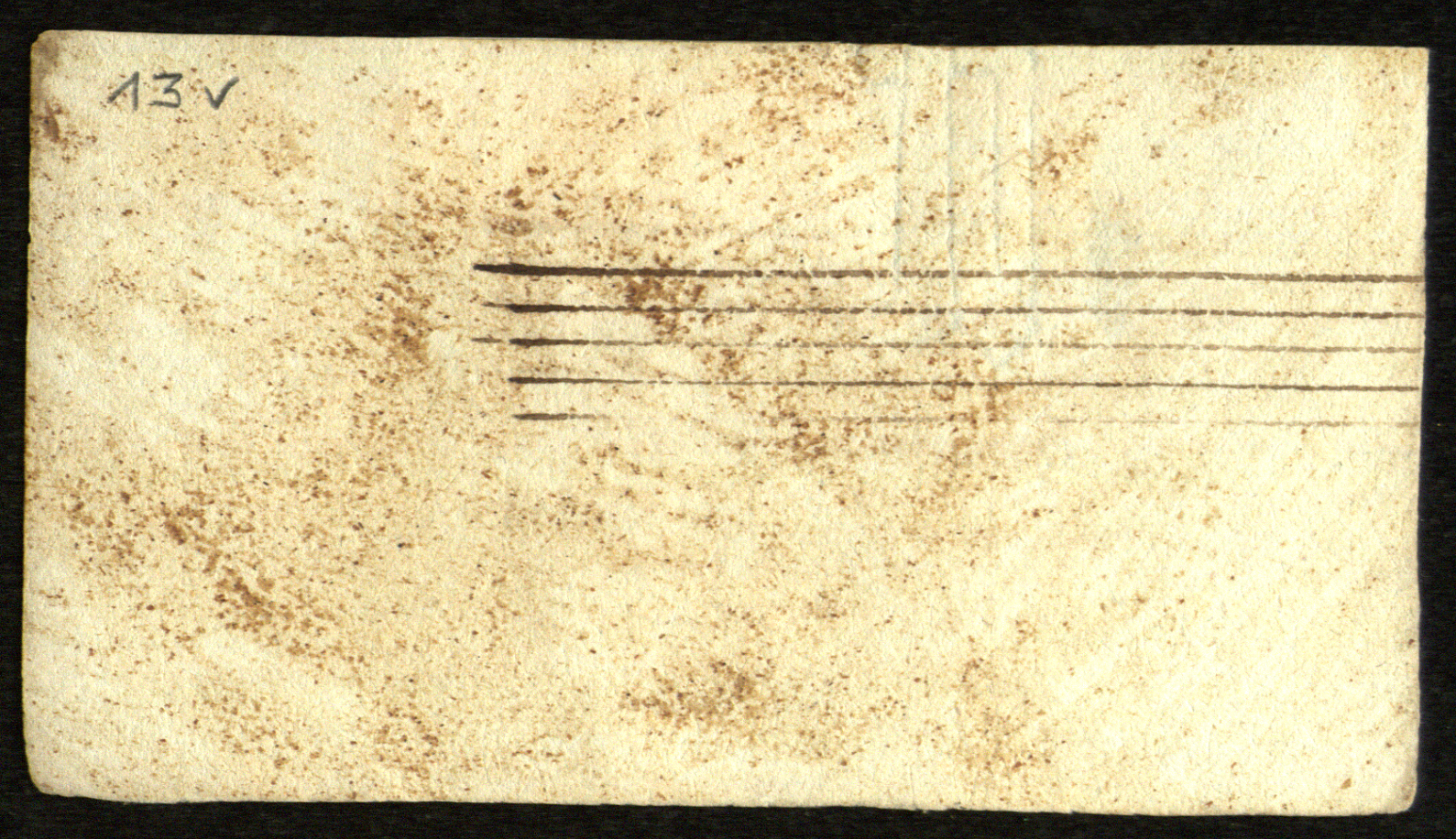
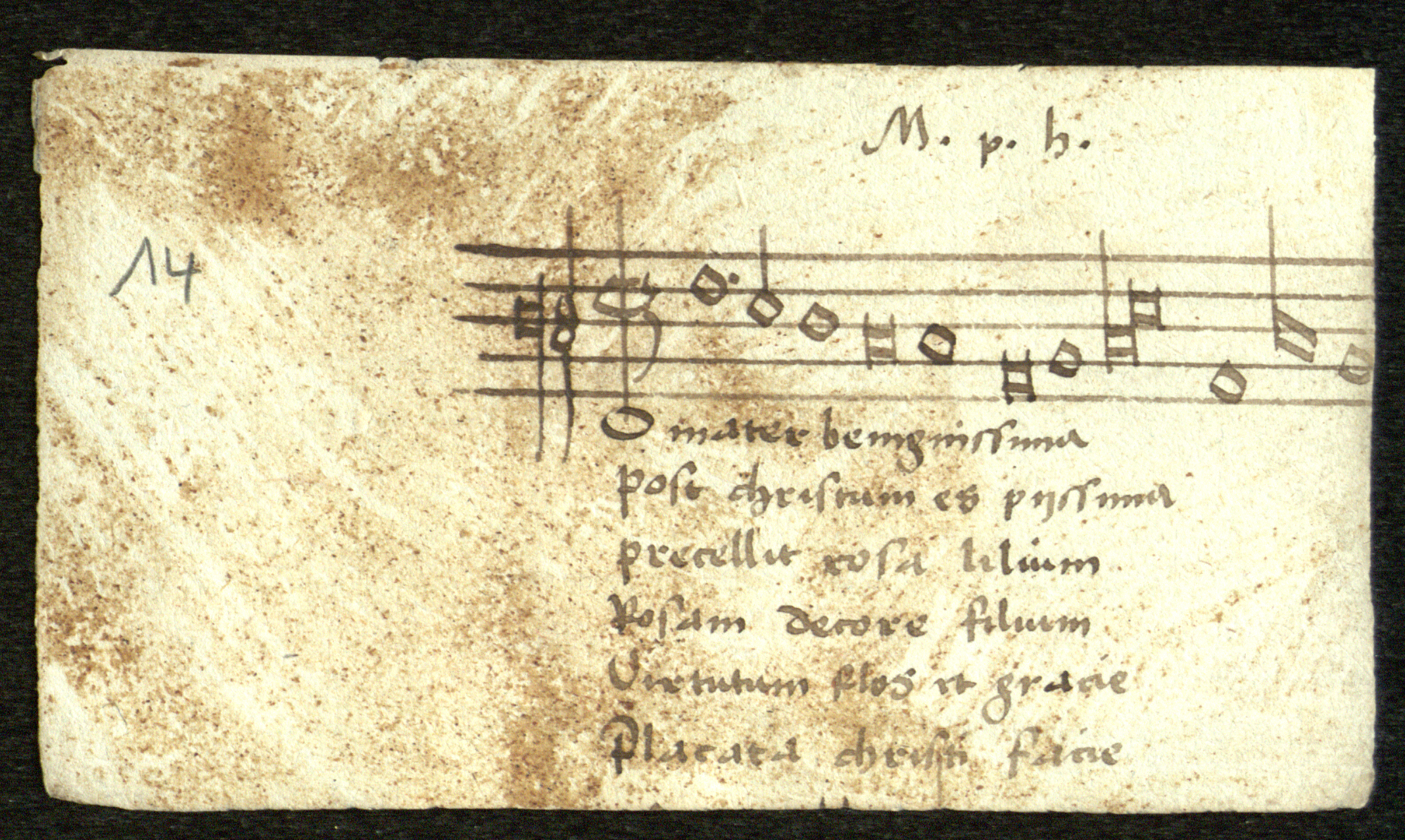
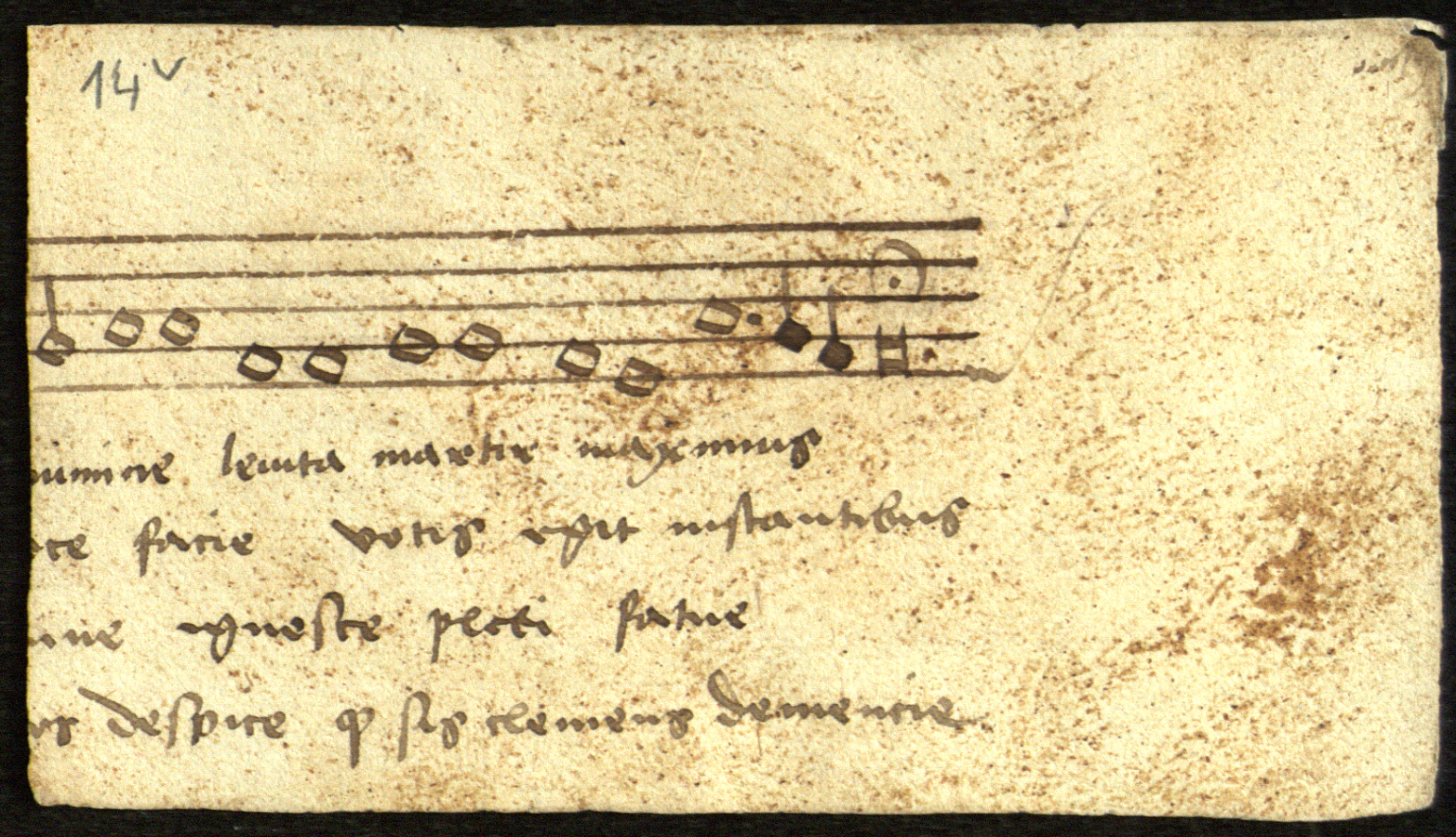
The Augsburg University Library has kindly given us permission to publish the fragments on this blog, and thus to make them known to the general public. We have also chosen the blog as an open medium because the pieces of music on the fragments pose a mystery to us. We are not aware of any musical settings of the texts found in the fragments by the composers in question, nor have we yet been able to identify any of the compositions contained therein. We hope that we will be able to identify at least some of the (possibly three-part) pieces – some of which are strophic Latin compositions – with the community’s help. We would be delighted if you would share your ideas here in the comments section and not just on social media, where we will share this post. Should there be any new findings, we will of course update this text.
| Folio | Composer | Clef | Text | Notes |
| 1r | ||||
| 1v | ||||
| 2r | ? | Decet laus et gloria | 4 strophes | |
| 2v | ||||
| 3r | C4 | Virgo deum genuit quem | Resonet in laudibus? | |
| 3v | ? | None | Notation only | |
| 4r | Sis, omnibus in horis, te co[rde flagitantium] … Fragments of hymn „Virgo mater piissima“ (Analecta Hymnica Medii Aevi, Vol. 45, #182) [1] | 3 strophes (continued on 13r) | ||
| 4v | ? | christo stephanus | 4 strophes | |
| 5r | Petrus de Riga | C4 | Pater misit filium in | |
| 5v | ? | vota | Very few text | |
| 6r | C4 | Per volans | ||
| 6v | ||||
| 7r | F3 | Predicavit ??? | ||
| 7v | [mi}randa | |||
| 8r | Alexander Agricol[a] | C4 | Aquilina facies […] [2] | 2 strophes |
| 8v | ||||
| 9r | Petrus de Riga | F3 | Verbum de sinu patris | 2 strophes |
| 9v | Ysac | |||
| 10r | Ysac | F3 | Procedentem spon[sum de thalamo] [3] | 4 strophes |
| 10v | monet nos leticie laudes | 3 strophes | ||
| 11r | F3 | ca … la | 4 strophes | |
| 11v | Q[uod] gub[er]nas omnia | |||
| 12r | M. paulus hoffhe[immer] | C4 | Sic frequens in memo[???] | 4 strophes „Medium“ |
| 12v | Demones obstruere | Lokes like motet | ||
| 13r | [col]laudantium stipendium laboris Fragments of hymn „Virgo mater piissima“ (Analecta Hymnica Medii Aevi, Vol. 45, #182) | 3 strophes (continuation of 4r above) | ||
| 13v | ?? | 4 strophes | ||
| 14r | M. p. h. | F3 | O mater Benignissima | 6 strophes |
| 14v | Levita martir maximus | 4 strophes |
[1] Protestant version „Christe rex piissime“ can be found in the 1582 collection Piae cantiones (https://runeberg.org/piaecant/0067.html).
[2] Remark by Paul Kolb: This text might be related to this responsory „Aquilina facies oculorum acies direxit” (Analecta Hymnica Medii Aevi, Vol. 26, #54 (p. 158).)
[3] See Reinhard Stohm, „Procedentem sponsum de thalamo“, in: Musikleben des Spätmittelalters in der Region Österreich, https://musical-life.net/audio/procedentem-sponsum-de-thalamo (probably Strohm was unaware of a setting of this text by Isaac). Many thanks to Paul Kolb for this remark and for all his help.
 Moritz Kelber
What a spectacular discovery – congratulations to you and Franz! I had a few thoughts about these fragments. I can’t find sources for all of them, at least not from the comfort of a Deutsche Bahn train, but here are some random observations.
Firstly, I suggest that the M. p. h. on 14v is Meister Paul Hofhaimer. I wonder too (though with extreme diffidence) if Petrus de Riga mightn’t be an obscure Latinisation of Pierre de la Rue.
Given the layout, it’s pretty clear that these pages come from a choirbook rather than from separate partbooks, with the bass on the bottom left, as is seen frequently in German choirbooks. The pencil recto and verso markings are clearly incorrect: the width of the margin on the verso pages suggest that these come from the right-hand side of an opening, and vice versa. I wonder if the library might be convinced to change the foliation to the correct recto-verso sequence.
As you noticed, many of the texts are in verse, and many appear to be hymns. Perhaps the manuscript, or at least this part of it used in this binding, was a collection of hymns for the church year, for use in the office. The text on 9r looks like a hymn for Christmas. The text on 10v and 11v is from the New Year’s cantio Novus annus hodie. Fol. 10v is evidently from the upper part of the folio, 11v from the lower part.
The text on 14r and 4r (in that order) is a variant of the Marian hymn “Virgo mater piissima, cunctorum plasmatoris,” in Dreves, Analecta hymnica vol. 45, p. 151, Nr. 182. I have reconstructed the text on the basis of Dreves, though the original was almost certainly different in detail from what Dreves gives. Since 14r and 4r both set the same text, it seems likely that these two pages were originally from the same opening. On the basis of the amount of text missing, I would estimate that there was another one or two openings of music after 4r.
The text on 9v is the Christmas hymn Procendentem sponsum de thalamo, reprinted in Wackernagel, Das deutsche Kirchenlied, vol. 1, p. 234, Nr. 393.
The word “levita” (priest or deacon) occurs on 12r and 14v, which suggests that these fragments belong to the same piece. I wonder if this might be a hymn for St Stephen’s day.
The phrase “Aquilina facies” suggests a hymn to St John the Evangelist.
I would suggest then that all the pieces were taken from a section of a manuscript with office hymns for the time from Christmas to New Year, including the feasts of SS Stephen (26 December) and John the Evangelist (27 December).
Incidentally, details such as the divisi on 8v suggest that at least two singers sang each voice part.
Here are some fuller transcriptions of the texts:
2r
Decet laus et gloria vir<>
tam mitis erat animus tam <>
terram flexis genibus salu<>
est salutis presciae sed <>
4r
Sis omnibus in horis te co<rde flagitantium/ Et ore collaudantium/ Stipendium laboris>
Tu sidus claritatis tu ba<lsamo suavior/ Sole, luna splendidior/ Fervore caritatis>
Nos a mundi sentina cel<erius eripias/ Et tecum nos custodias/ In unitate trina.>
4r
<> christo stephanus
<>idantibus
<>eccutum [??] statue
<e> clemencie
6r
preuolans
7r
Predicauit ritu miro
8r
Aquilina facies et acies d<>
Circumstant vociferi laudigeri
9r
Verbum de sinu patris <>
Vox nuncians oris <>
9r
<> laus est
9v
Procedentem spon<sum de thalamo>
Prophetauit scri<ba cum calamo
En Trinitatis speculum
Illustravit seculum.>
Stricta ligat in <cunis fascia
Quem produxit divina gratia
Puer admirabilis
Hic iacet in cunabulis.>
Ergo benedi<camus domino
Cuius potestas caret termino
En Trinitatis speculum
Illustravit seculum.>
10v
<Novus annus h>odie monet nos leticie laudes inchoare
<Felix est pri>ncipium cuius finis gaudium solet terminare
<Puer circumdu>itur et legi subicitur hostia legali
11v
<Eia rex nos ad>iuua qui gubernas omnia
12r
Sic frequens in memo<ria>
Leuita de quo canimus <>
Vocibus aut lenibus <>
Plebs hec quid agat <>
14r
O mater benignissima <Cunctorum plasmatoris>
Post christum es piissima <Salvatrix peccatoris>
Precellit rosa lilium <Candore puritatis >
Rosam decore filium <Quem parit castitatis>
Virtutum flos et gracie <Aures ad nos inclina>
Placata christi facie <Charismata propina>
14v
<>unicie [?] leuita martir maximus
<>te facie votis egit instantibus
<>ine ignosce pecti fatue
<>s despice quod sis clemens demencie
Only just seen this. Spectacular. May I endorse Grantley’s comments? I do think refoliation would be appropriate (even though it is unlikely to be definitive). And I very much support his tentative suggestion that Petrus de Rigo could be Pierre de la Rue. Ditto that it is from a portion of a choirbook devoted to hymns of the Christmas season.
David Fallows (david.fallows@manchester.ac.uk)